The House We Inherit
Freshers @ Fé Collective end-of-year show featuring Annabel Cator, Tania Pourashraf, Jingyi Li, Angelica Hoang, Caro Lestón.
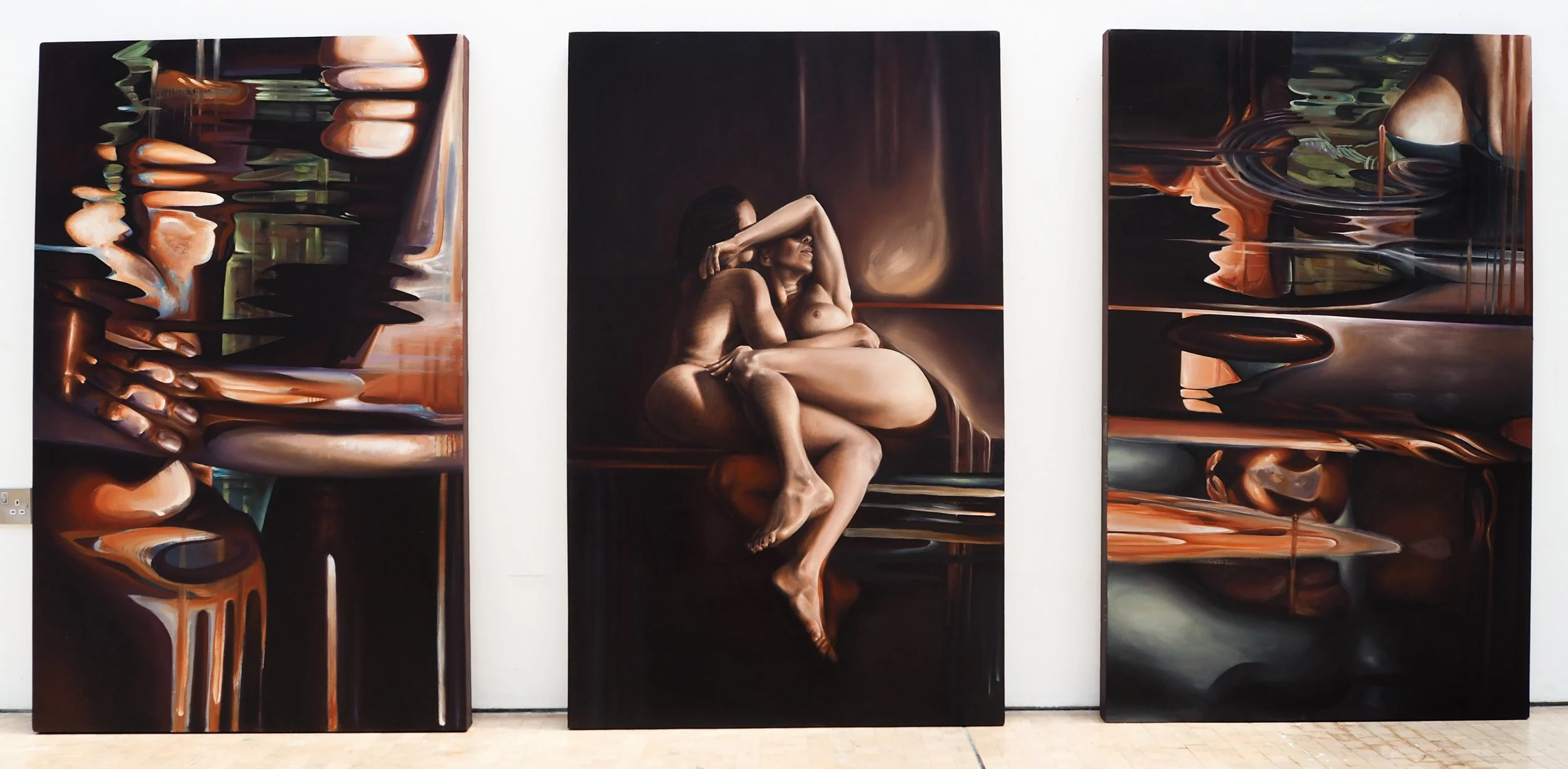
Annabel Cator, how time moves us, how we move time, 2026
“One of the most vital ways we sustain ourselves is by building communities of resistance, places where we know we are not alone.” - Bell Hooks
The House We Inherit brings together the five artists who are a part of the inaugural Freshers cohort. Together they explore inheritance as the rituals that give us a sense of belonging. The exhibition proposes that the values, traditions, and ways of being passed between generations are our richest inheritance. If embraced and wrestled with wisely, they can offer a sense of purpose and belonging.
While a house is built from walls, a home is shaped through repeated acts of care, craftsmanship, and devotion. Bell Hooks argues that home is not merely shelter but the foundation from which culture, identity, and resistance emerge. Across cultures these rituals differ, yet they share a common purpose: to transform physical space into a place of belonging. The exhibition proposes that these rituals and forms of intergenerational embodied wisdom generate sites of potential transformation, offering what postcolonial theorist Homi K. Bhabha describes it as a "Third Space;" a place where inherited identities are neither simply preserved nor abandoned, but reimagined through negotiation, adaptation, and exchange. Within these spaces, decay and separation are not understood as endings, but as conditions from which regeneration, healing, and new forms of belonging can emerge. Through their work, the artists give tangible form to this invisible inheritance, revealing what is often unseen and reminding us that culture continues to resist erasure through the acts of making.
At the heart of the exhibition lies the belief that craftsmanship is not simply the production of objects but the cultivation of the self. Perennial philosophy suggests that beyond the world's religions and spiritual traditions lies a shared truth: the pursuit of beauty is ultimately the pursuit of the divine. The journey begins in the ordinary rhythms of daily life. Confucius understood that the repeated rituals of making, caring, and dwelling cultivate moral character and create harmony within the home and wider community, revealing beauty in the everyday. Gandhi suggests that repetitive action can lead to a meditative state of mind, a place where disciplined labour becomes a means of cultivating the inner self. Meditation requires surrender. Cecil Collins encouraged his students to "bow to the brushes," recognising that the act of making begins not with mastery but with humility, allowing the process itself to become the teacher. It is in this thought that Dr David Cranswick's description of craftsmanship as "the inner journey expressed through an outward practice" finds its fullest expression: as the work is refined, so too is the person making it. The process cannot be hurried, for to bypass the journey is to lose its meaning. Craftsmanship is therefore not an act of self-expression, but of revelation. It patiently uncovers what has always been there, making visible what was once invisible.
Beauty draws heaven and earth into dialogue, it is the meeting place between the visible and the invisible. Within the Greek tradition, this meeting can be understood through the term of Logos–the divine ordering principle through which truth becomes intelligible and the eternal is encountered within the material world. Plato understood physical beauty not as an end in itself but as a glimpse of an eternal reality beyond appearances, inviting us towards higher truths. Beauty allows us to step beyond ourselves before returning us to the ordinary conditions of human life with renewed clarity, John Keats described it as the "journey homeward to habitual self." Yet the truth beauty reveals is beyond our understanding and ability to sit in the presence of. The ancient image of the Egyptian goddess Isis, whose veil no mortal has lifted, reminds us that ultimate reality remains mysterious, patiently unveiling itself to those willing to seek it. It is this longing that C.S. Lewis described it as our "inconsolable secret": the desire to bridge the distance between ourselves and ultimate reality. Beauty awakens this longing because it points beyond itself while returning us more deeply to ourselves. In this way, craftsmanship becomes more than artistic production. It is a lifelong practice through which repetition becomes meditation, meditation becomes surrender, surrender becomes revelation, and making becomes a way of remembering the truth that has always been there.
The House We Inherit invites viewers to approach each work in the same spirit with which it was made: attentively and with openness to what cannot be immediately explained. Rather than asking only what an artwork represents, consider the rituals that shaped it, the hours of repetition embedded within its surface, and the generations of knowledge carried through its materials. These works are not simply expressions of individual identity but records of an inward journey made visible. They remind us that the deepest inheritance is neither property nor possession, but a way of living–one that understands beauty not as decoration, but as a path towards truth; craftsmanship not as labour, but as the cultivation of the human spirit; and ritual not as habit, but as the means by which we come to know ourselves. Like a home, this inheritance is built patiently, through countless acts of faithful attention, until the invisible becomes visible, and the ordinary reveals something eternal.
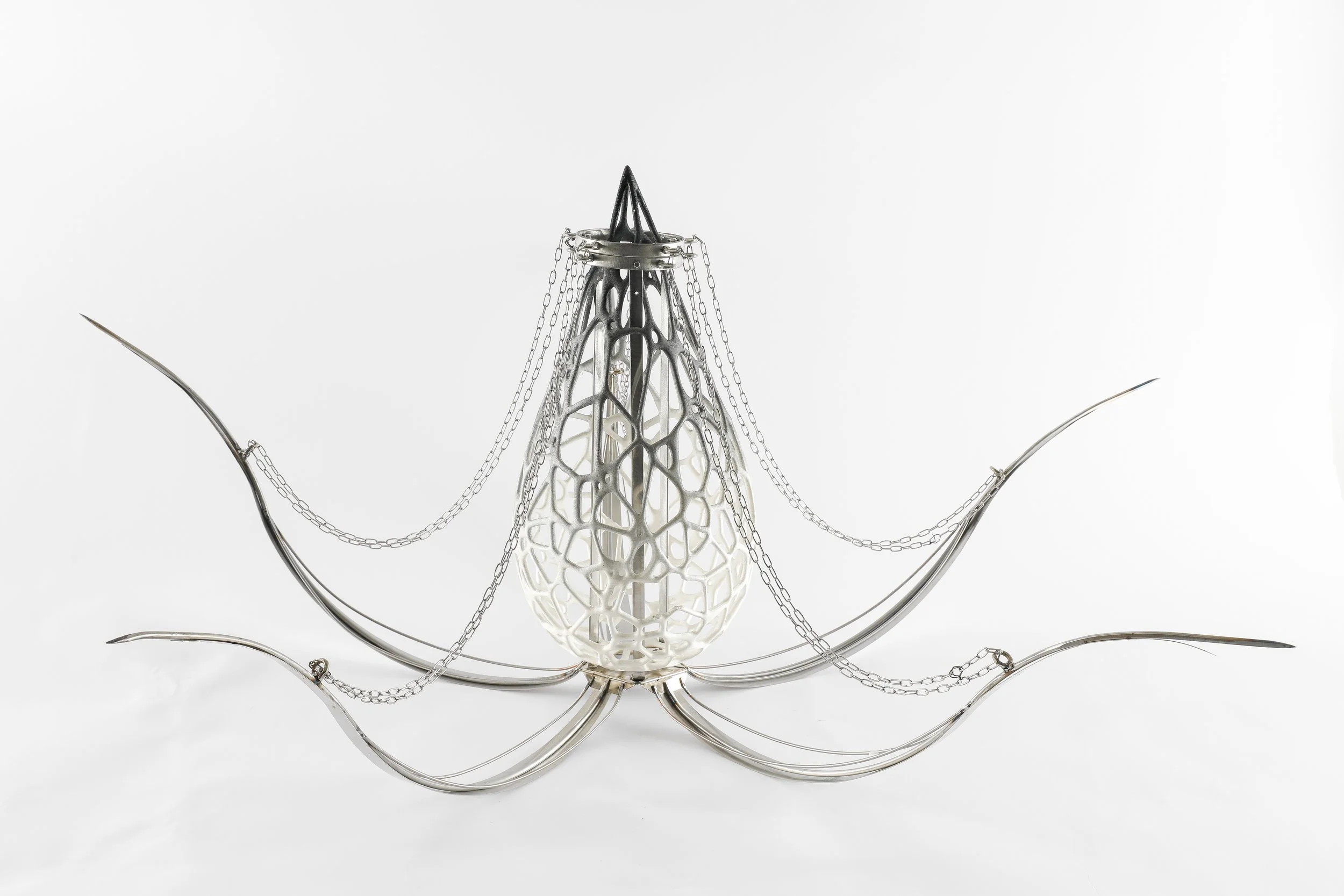
Annabel Cator, it’s night time but the birds are singing, 2026
Annabel Cator
Annabel Cator’s practice speaks to reconceptualisation of home within the body, drawing on her upbringing and affinity with rural parts of Australia. Her process is intimately grounded in cycles of decay. She suspends her work within a wider ecological framework through biomaterial research and queer ecological studies.
Her work fosters intimacy with processes larger than herself, those pertained by death, decay and regeneration. The type of forces that err us to sit on the edge of discomfort. In relating to the chthonian, the dark matter that slips around subterranean earthly forms within the body, her work conveys the discomfort against our own vitality that is often disproportionately projected onto queer female bodies.
In an act of resistance and reformation, she incorporates her body in both installation, performance and figurative painting in a process of abstraction and becoming, using it to challenge and rework narratives around femininity and queerness. She alleviates dark pleasures and sacred forms to become a part of her daily expression as seen in her exploration of darkness.
Her multimedia and dimensional approach allows her to move fluidly between sensory and communicative modes, developing a deeply embodied practice that attends to presence, space, and transformation.
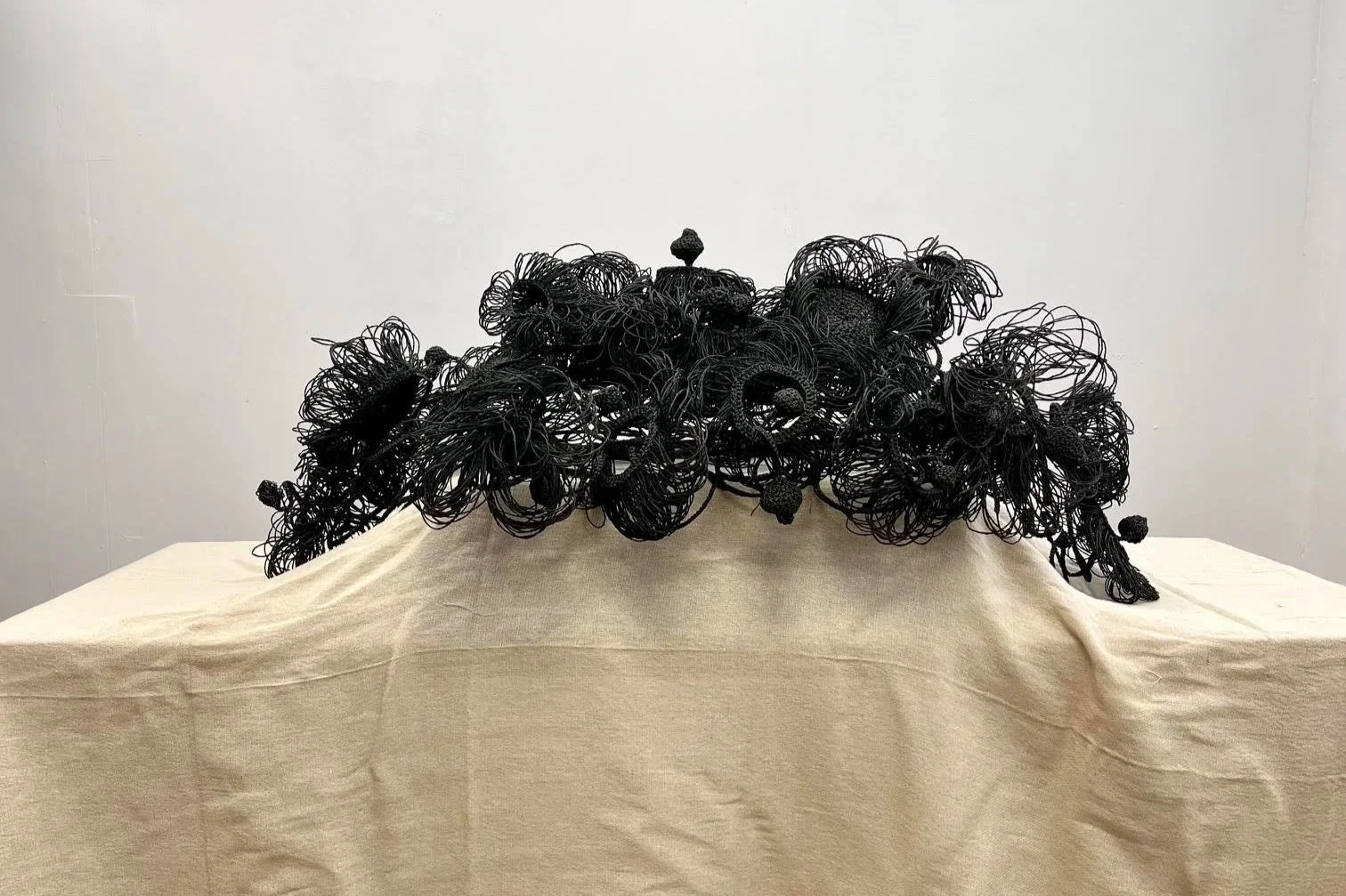
Angelica Hoang, In the storm we seek, 2026
Angelica Hoang
Angelica Hoang's practice is rooted in an attentiveness to the things we make, the relationships we nurture, and the spaces we inhabit. Shaped by her upbringing as the daughter of Vietnamese refugee parents, her work reflects a legacy in which duty, care, and resourcefulness were not simply ideals, but conditions of survival.
Within her family, craft was expressed through quiet, everyday acts: her mother's garment making, her father's drawings, her grandmother's basket weaving, and her grandfather's poetry. These practices were never defined as art, but as essential acts of care and preservation. Through them, Hoang came to understand creativity as something that holds, repairs, and sustains through hardship.
Working primarily with textiles and craft, she continues this intergenerational language of making, drawing on memory and material to reclaim inherited gestures. What was once private becomes visible, and what was once functional becomes expressive.
Her practice is both a continuation of her family's lineage and a tribute to the craftspeople who were forced to set aside their creative practices in order to survive. Through her work, Hoang honours their legacy, affirming care, craftsmanship, and making enduring acts that shape both identity and belonging.
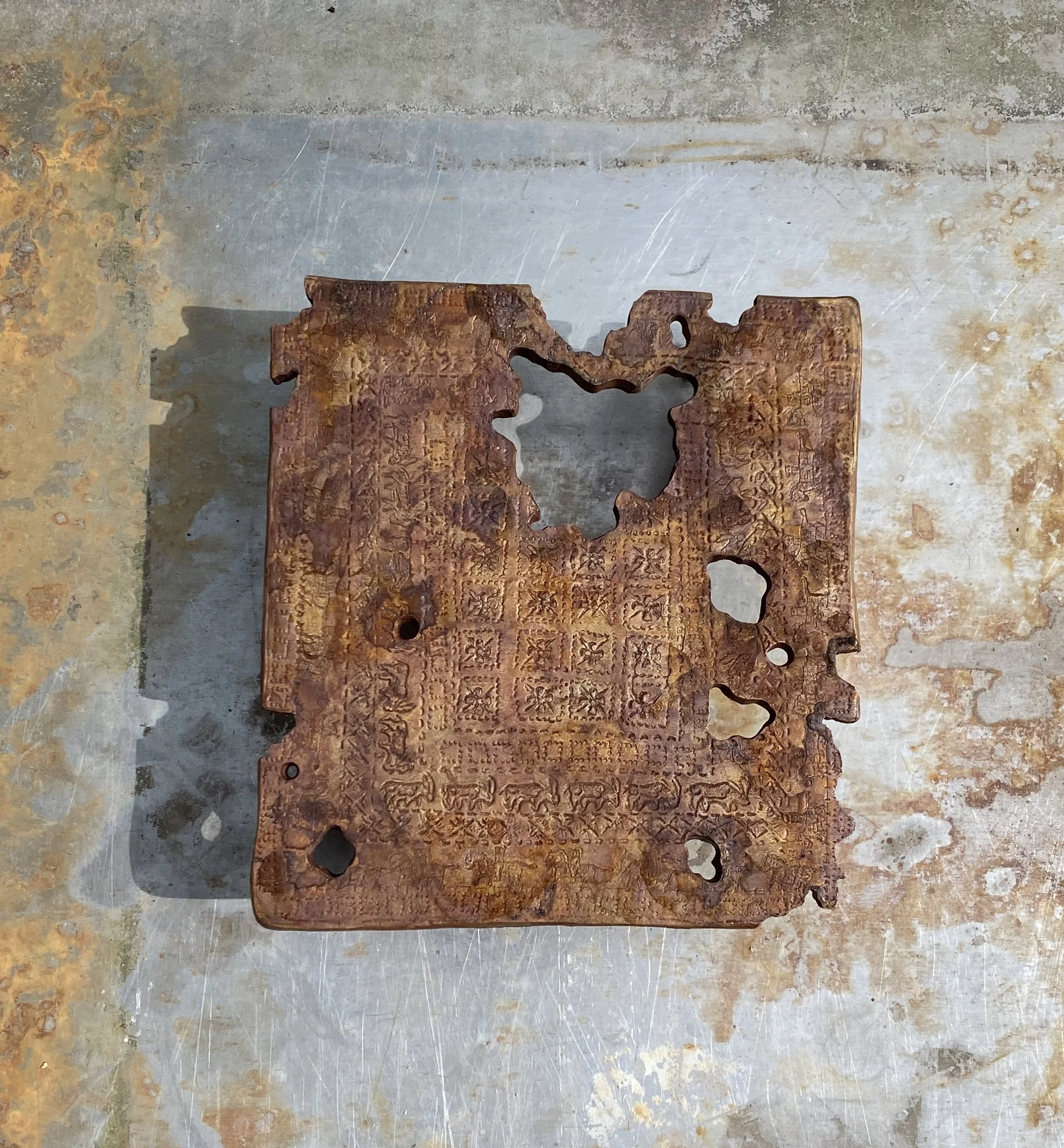
Tania Pourashraf, XXX, 2025
Tania Pourashraf:
Tania Pourashraf's practice emerges from the tension between memory, identity, and resistance. Having lived under the restrictive regime in Iran, she draws on both personal and inherited histories that continue to shape her work. Her greatest influences are the resilience of everyday Iranians, especially her mother and grandmother, whose strength, dignity, and enduring love continue to shape both her worldview and artistic practice. Through highly detailed drawings, installations, performance, sound, and poetry, she transforms experiences of fear, silence, and displacement into works that give form to what was once forbidden.
Her practice is rooted in an enduring commitment to bearing witness. Responding to the ongoing violence and oppression in Iran, she creates works that hold space for collective grief while affirming resilience. Rather than simply reflecting lived trauma, her work becomes an act of defiance, refusing to allow these realities to be erased or forgotten.
More recently, Pourashraf has turned to her ancient Persian heritage, researching Zoroastrianism and its philosophies as a way of reconnecting with a culture that the current regime continues to suppress. She intentionally uses her own face as the central subject in her drawings, removing identifiable references to others in order to protect those who remain at risk. In doing so, she becomes both witness and subject, embodying a shared experience rather than portraying an individual.
Influenced by the taboo, the forbidden, and histories that have been erased, Pourashraf's practice seeks to preserve voices threatened with disappearance. Inspired by artists such as Soheila Sokhanvari, whose portraits honour the women of Iran, her work insists on the presence of stories that have been silenced, preserving memory as an act of resistance and demanding the possibility of change.
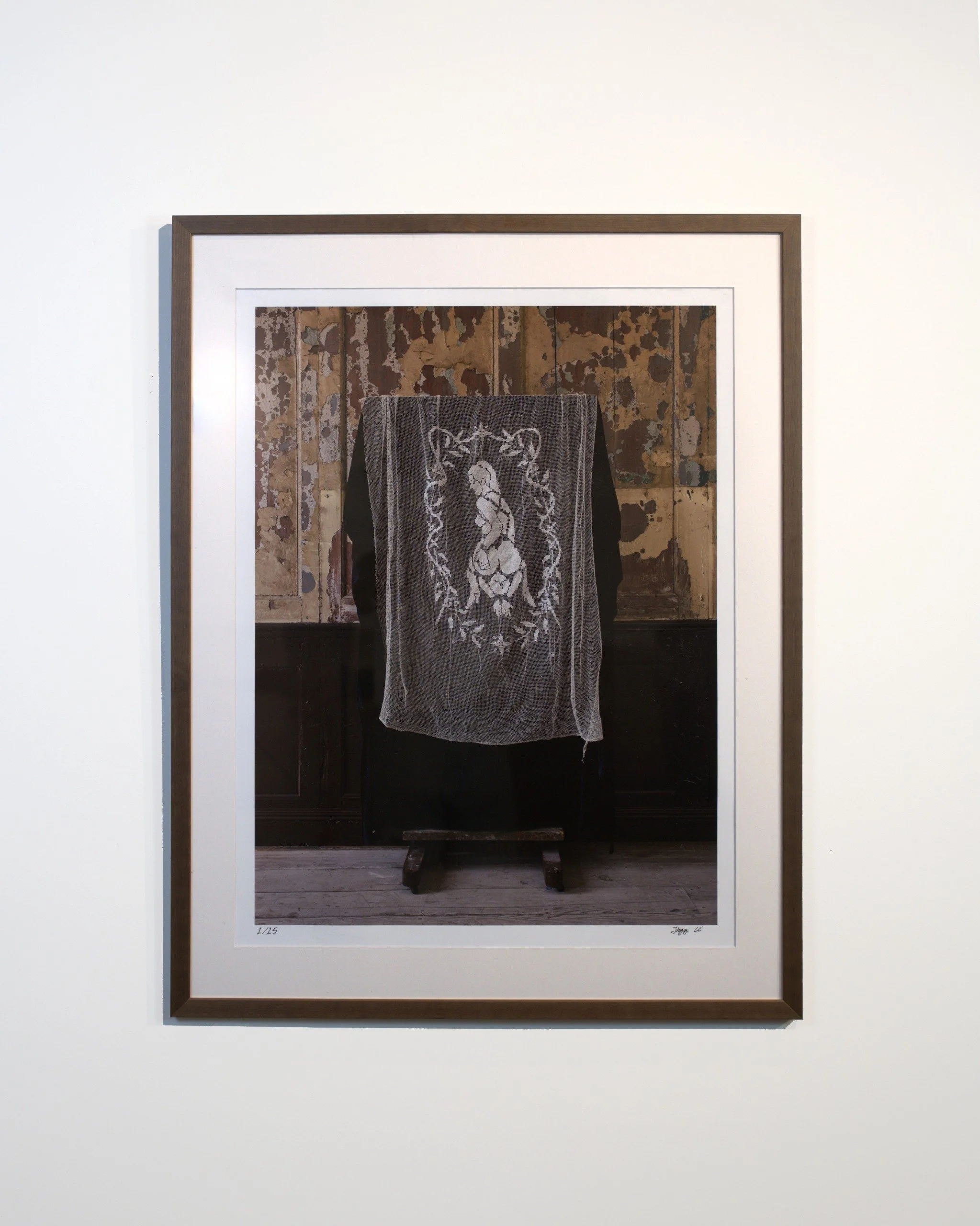
Jingyi Li, Print-New Heaven 02, 2026
Jingyi Li
“My mother and grandmothers, through their quiet domestic labor, showed me how material becomes memory, and care becomes resistance.”- Jingyi Li
Her practice interlaces feminist narratives, material culture, and soft forms, with lace-making at its core. Through transforming traditional lace techniques into sculptural and domestic objects, her work examines female desire, submission, and BDSM dynamics, foregrounding Asian women’s stories and feminist spatial imaginaries. Working through auto-ethnographic approaches, Jingyi explores how soft materials and domestic objects carry power, memory, and embodied knowledge, treating making as a non-verbal form of writing.
For this show, Jingyi presents a new work from her ongoing New Heaven series. Inspired by the idyllic imagery found in traditional filet lace patterns, the work draws a parallel between inherited visions of paradise and the fantasies projected through contemporary pornography, exploring how desire is shaped through imagined spaces.

Caro Lestón, XXXX, 2026
Caro Lestón
Lestón's practice sits at the intersection of magic, creation, ferality, and womanhood, approached through a radical Latine feminist perspective shaped by the traditions of magical realism. For her, magic is both a political and imaginative space, offering a language through which voices long silenced can be heard across generations.
Her research explores the politics of bodies and space, examining how women's bodies are permitted, restricted, or excluded within both public and private realms. Through ritual and feminine power, she resists the loss of public space and challenges the systems that continue to regulate the performance of gender.
Drawing on the writings of Gloria Anzaldúa, Isabel Allende, and Nawal El Saadawi, alongside the folklore and female archetypes of her native Galicia, Lestón investigates the evolving forms of invisible oppression that shape everyday life. Her work reveals how these structures persist across both physical and digital spaces, continually redefining the expectations placed upon women.
At its core, Lestón's practice is an act of resistance, refusing invisibility, reclaiming space, and insisting on the full expression of womanhood.